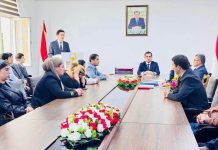
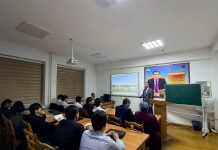
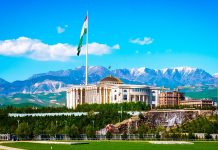
Every year, November 16 is celebrated in the Republic of Tajikistan as the Day of the President of the Republic of Tajikistan. This date holds an important place in the history of modern Tajik statehood and is associated with the landmark events of the period of the country’s state independence. The observance of this day provides an opportunity to reflect on the history of the formation of national statehood, the strengthening of state independence, and the achievements of the independence period.
After gaining state independence, Tajikistan entered a difficult political and social period. The civil war, political crisis, and economic difficulties had a negative impact on the foundations of statehood. Under these circumstances, preserving independence, protecting the territorial integrity of the country, and achieving peace and national unity became matters of paramount importance.
On November 16, 1992, the 16th Session of the Supreme Council of the Republic of Tajikistan began its work in the city of Khujand. At this historic session, Emomali Rahmon was elected Chairman of the Supreme Council of the Republic of Tajikistan and assumed responsibility for leading the state. Subsequently, on November 16, 1994, Emomali Rahmon took the oath of office as President of the Republic of Tajikistan. This date was established as the Day of the President of the Republic of Tajikistan and is celebrated annually.
One of the most important challenges during the period of independence was the restoration of peace and stability and the strengthening of national unity. The signing of the General Agreement on the Establishment of Peace and National Accord on June 27, 1997, laid the foundation for ending the civil war and beginning a new stage in the political and social life of the country. The experience of the Tajik peace process has also attracted international attention as an example of the peaceful and consensual resolution of conflict.
During the period of state independence, important measures were implemented to strengthen the foundations of statehood and develop various areas of public life. The adoption of the Constitution of the Republic of Tajikistan, the formation of state institutions, the improvement of the legal system, economic development, and the expansion of international cooperation became important steps toward building a sovereign, democratic, law-based, secular, and social state.
One of the priority directions of state policy is the development of education and science. During the years of independence, new educational institutions were established, and various measures were implemented to improve educational and upbringing conditions and to train highly qualified specialists. Republican competitions such as “Furughi Subhi Donoi Kitob Ast” (“The Light of Knowledge at Dawn is the Book”), “Ilm – Furughi Ma’rifat” (“Science — the Light of Enlightenment”), “Tojikiston – Vatani Azizi Man” (“Tajikistan — My Beloved Homeland”), and “Tojikon – Oinai Tarikhi Millat” (“The Tajiks — a Mirror of the Nation’s History”) contribute to raising public awareness, identifying talents, and strengthening national self-consciousness.
Alongside education, the fields of the economy, industry, energy, transport, healthcare, and culture have also developed. The construction of roads, tunnels, hydroelectric power plants, and industrial enterprises has created favorable conditions for improving the living standards of the population and strengthening the country’s economic potential.
During the period of independence, Tajikistan has also strengthened its position on the international stage. The country’s foreign policy is based on the principle of “open doors” and mutually beneficial cooperation. One of the important areas of Tajikistan’s international activities is the promotion of initiatives concerning water resources and environmental protection. In particular, the International Decade for Action “Water for Life” (2005–2015) and the International Decade for Action “Water for Sustainable Development” (2018–2028) are important initiatives of the country within the framework of the United Nations. These initiatives are aimed at addressing issues related to the rational use of water resources and environmental protection.
At the same time, presenting the rich history and culture of the Tajik people on the international stage, respecting the heritage of ancestors, protecting the state language, and promoting national values are of great importance for strengthening national self-consciousness and increasing citizens’ sense of patriotism.
In this process, young people play a particularly important role. Studying modern sciences, acquiring professional skills and crafts, observing the law, and actively participating in constructive activities should be the responsibility of every patriotic young person. Knowledgeable and well-educated young people are the driving force of society and the future of the state.
Thus, the celebration of the Day of the President of the Republic of Tajikistan represents an expression of respect for the history of national statehood and recognition of the contribution of the President of the Republic of Tajikistan, Emomali Rahmon, to strengthening independence, restoring peace and stability, promoting national unity, and developing modern Tajik statehood. This day calls upon us to value peace and tranquility, preserve national values, and contribute to the prosperous and progressive future of Tajikistan.
H. G. Asoev and M. H. Zuhurov, lecturers at the Department of Astronomy, Faculty of Physics, Tajik National University.